
What the gut and skin have in common
The gut and the skin share several key features. Understanding these similarities helps explain, from the outset, why they are so closely connected.
Both the gut and the skin:
-
Are highly vascularized, meaning they are rich in blood vessels and closely connected to the immune system
-
Play essential roles in immune regulation
-
Are lined with epithelial cells that form protective barriers between the body and the environment
While the skin acts as the body’s first physical defense against external stressors, the gut represents one of the largest internal interfaces with food, microbes, and environmental inputs.
Why gut health matters for skin
Skin health is often approached from the outside—with cleansers, serums, and creams. However, growing scientific evidence shows that internal balance plays an equally important role.
The connection between gut health and skin health – known as the gut–skin axis – is described in scientific literature as bidirectional. Changes in the gut or skin microbiome can disrupt immune balance and contribute to inflammatory skin conditions.
Both the gut and the skin are densely populated by microorganisms—but not to the same extent. While the skin hosts approximately 1 trillion microbial cells, the gut contains roughly 100 trillion. Because the gut microbiome is so large and metabolically active, imbalances there are more likely to have widespread effects throughout the body—including on the skin.
This helps explain why inflammatory skin conditions are often linked to deeper internal imbalance, and why skincare alone is not always sufficient for long-term skin health.
Dysbiosis: When gut imbalance affects the skin
The gastrointestinal (GI) tract—also known as the digestive system—is often referred to as the body’s “second brain.” It contains a vast and diverse community of beneficial microbes that help regulate digestion, immune function, inflammation, and overall balance (homeostasis).
Each person’s gut microbiome is unique and shaped by diet, environment, stress, and lifestyle. Diets high in ultra-processed foods, along with chronic stress, are associated with reduced microbial diversity, which can disrupt this balance.
When microbial diversity declines and harmful organisms overgrow, a state known as dysbiosis occurs. Dysbiosis can develop in the gut, on the skin, or both—and is increasingly linked to systemic inflammation and weakened barrier function.
Because the gut microbiome is so large and metabolically active, imbalances there can have effects that extend beyond the digestive system, often becoming visible on the skin.
Skin conditions linked to gut imbalance
Many inflammatory skin conditions such as acne, eczema, and psoriasis continue are increasingly understood as outward signs of internal imbalance. Research suggests that disruptions in the gut microbiome can influence immune regulation and inflammation throughout the body—often appearing on the skin.
-
Acne
In the gut, reduced microbial diversity and an imbalance between bacterial groups—such as lower levels of beneficial Firmicutes and higher levels of Bacteroidetes—may contribute to systemic inflammation and altered hormonal signaling. This internal inflammation can then appear on the skin as acne, where certain strains of Cutibacterium acnes trigger breakouts, redness, and delayed healing. -
Atopic dermatitis (eczema)
In the gut, altered microbial composition—particularly lower levels of beneficial bacteria such as Bifidobacterium and Akkermansia, alongside higher levels of potentially pro-inflammatory bacteria like Clostridium and Escherichia—may impair immune tolerance and barrier regulation. This imbalance can manifest on the skin as eczema, marked by dryness, itching, inflammation, and increased colonization by Staphylococcus aureus. -
Psoriasis
In the gut, changes in overall microbial diversity—often involving reduced beneficial bacteria and shifts in Firmicutes and Proteobacteria populations—are associated with heightened systemic inflammation and immune dysregulation. This inflammatory state can appear on the skin as psoriasis, with thickened, inflamed patches, recurring flare-ups, and parallel changes in the skin microbiome.
These examples highlight that skin conditions are often not isolated skin issues, but reflections of deeper systemic imbalance. Supporting gut health and microbial diversity can therefore play an important role in managing inflammation and maintaining long-term skin health.
Is there a specific solution for skin issues?
There is no single diet, ingredient, or skincare routine that can address every skin concern. Long-term skin health requires a combined and individualized approach. However, there are several evidence-informed habits that can support healthy skin:
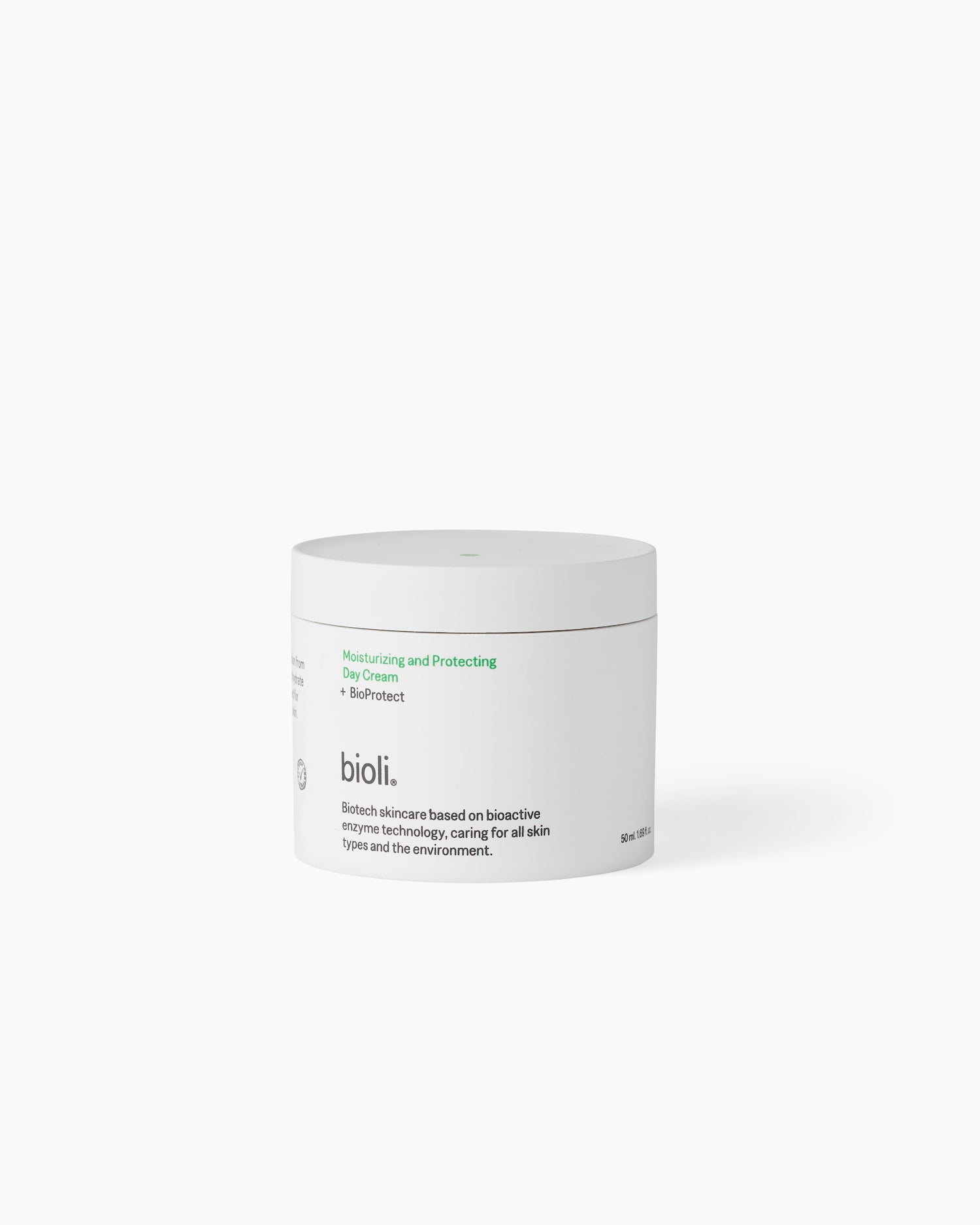
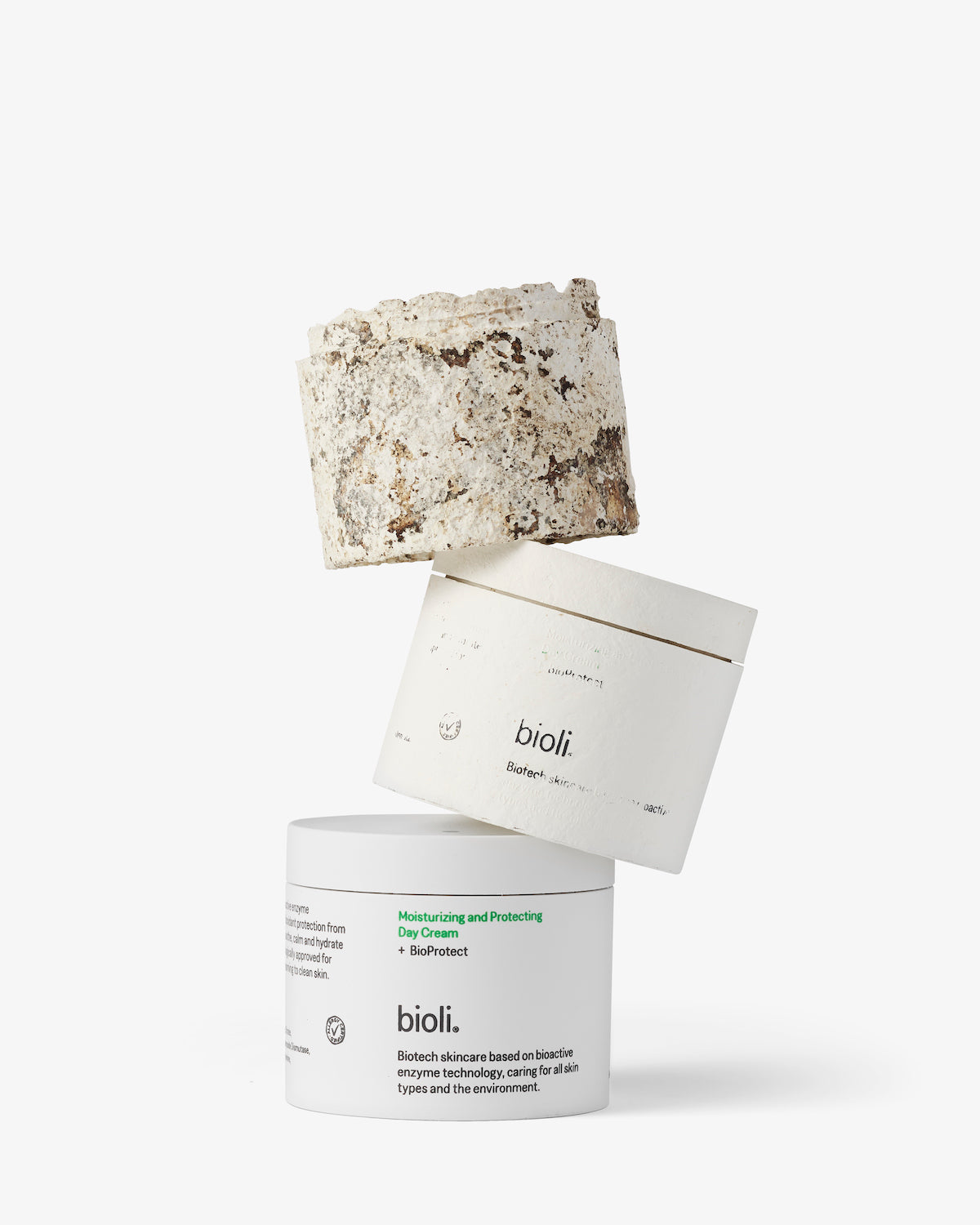
- Moisturize and strengthen the skin barrier with high-quality, gentle skincare. Explore Bioli's Moisturizing and Protecting Day Cream, Strengthening Serum and Clarifying Cleanser and Exfoliator, developed with biotech-derived and skin-supporting ingredients to help keep skin hydrated, soft, and balanced.
- Support the gut microbiome with a varied, nourishing diet.
For severe or persistent skin conditions, always seek guidance from a dermatologist—and, when appropriate, a nutritionist.