
Foucs
Face cream for redness and rosacea-prone skin
What causes facial redness?
Facial redness is not always caused by the same thing. Some people experience temporary redness after exercise, changes in temperature or exposure to sunlight. Others have skin that is generally sensitive or reactive, while persistent redness may be associated with rosacea.
Redness can also occur together with dryness, itching, burning or stinging. If these symptoms are persistent, worsening or difficult to manage, it is worth speaking to a doctor or dermatologist to determine the underlying cause.
Inflammation can play an important role in several common skin conditions, including rosacea, eczema and acne. Read more about the connection between inflammation, oxidative stress and skin disorders in our article Inflammation – The hidden issue behind five major skin disorders. For more about sensitive and reactive skin, read Suffer from sensitive skin? Learn how to calm it.
What should you look for in a face cream for rosacea-prone skin?
There is no single face cream that is right for everyone with redness or rosacea-prone skin. Individual tolerance matters, particularly when the skin is sensitive or reactive.
When choosing a face cream, it can be useful to look for:
-
Fragrance-free formulations – particularly if you know your skin reacts to fragrance.
-
Mild formulations – with ingredients your skin tolerates well.
-
Hydration – to help maintain the skin’s moisture balance.
-
Barrier support – to help maintain the skin’s natural protective function.
-
A comfortable texture – something you can use consistently without feeling heavy or uncomfortable.
- Recognised allergy certification – such as AllergyCertified, which can provide additional reassurance when choosing products for sensitive skin.
The ingredient list is often more useful than the label ‘rosacea cream’.” What matters is whether the formulation suits your skin and its needs.
What should you avoid in skincare for rosacea-prone skin?
There is no universal list of ingredients that everyone with rosacea needs to avoid. What triggers one person’s skin may not affect another. However, if your skin is easily irritated, it can be worth being mindful of:
| What to be mindful of | Why |
| Fragrance | Fragrance can irritate sensitive or reactive skin and may cause allergic reactions. If your skin is prone to redness or irritation, fragrance-free skincare can be a sensible place to start. Read more about fragrance in skincare in the article here. |
| Essential oils | Frequent or aggressive exfoliation can increase irritation and sensitivity, particularly when the skin barrier is already compromised. [Read more about cleansing and exfoliation here. |
| Harsh cleansing | Can leave the skin dry, tight or uncomfortable and may further stress the skin barrier. |
| Intensive exfoliation | Frequent or aggressive exfoliation can increase irritation and sensitivity, particularly when the skin barrier is already compromised. [Read more about cleansing and exfoliation here. |
| Too many new products | Introducing several products at once makes it difficult to identify what your skin reacts to. |
Can a face cream help with facial redness?
A face cream cannot guarantee that redness will disappear, and skincare should not be considered a treatment for rosacea. Skincare can, however, help maintain hydration, support the skin barrier and minimise unnecessary irritation. For some people, this can help the skin feel more comfortable and look more balanced. If you experience persistent facial redness or suspect you may have rosacea, it is important to have this assessed by a doctor or dermatologist.
What is a simple skincare routine for redness-prone skin?
When skin is sensitive or prone to redness, a simple routine can be a good starting point. You do not need a large number of products.
| Cleanse | Hydrate & strengthen | Moisturize | Protect | |
|---|---|---|---|---|
| Morning | If needed | Optional | Daily | SPF |
| Evening | Gentle cleanse | Optional | Daily | — |
| As needed | After sweating | When needed | If dry or tight | Reapply SPF |
If your skin reacts easily, introduce products gradually rather than changing your entire routine at once.
A good skincare routine is only one part of supporting healthy skin. Diet, sleep, stress and other everyday habits can also play a role in overall skin health. Read more in our guide What to eat for better skin, combating acne and eczema.
Ingredients to look for in skincare for sensitive and redness-prone skin
When choosing skincare for sensitive or redness-prone skin, it can be useful to understand what different ingredients are designed to do. Rather than looking for one “miracle” ingredient, consider how the ingredients work together in the complete formulation.
| Skin need | What to look for | Bioli |
|---|---|---|
| Gentle cleansing | Enzymes such as protease and lipase can help cleanse the skin by gently breaking down excess sebum and build-up. | Clarifying Cleanser and Exfoliator |
| Hydration and conditioning | Ingredients such as hyaluronic acid and glycerin can help attract and retain moisture, while emollient ingredients and cellulose help soften and condition the skin. | Strengthening Serum Moisturizing and Protecting Day Cream Clarifying Cleanser and Exfoliator |
| Antioxidant protection | Antioxidants such as Superoxide Dismutase (SOD) can help protect against oxidative stress. |
Strengthening Serum Moisturizing and Protecting Day Cream |
| Skin barrier support | Ingredients such as niacinamide and ceramides can help support the skin barrier. | Strengthening Serum |
Ingredients do not work in isolation, however. The concentration, combination of ingredients and overall formulation all influence how a product performs and how well it is tolerated by individual skin.
How to read an INCI list
For sensitive or reactive skin, looking at the complete ingredient list can be more useful than relying on general claims. The ingredient list tells you what is actually in a product, and understanding a few common INCI names can help you make more informed choices for your skin. For a deeper explanation, read our article Unfolding the ingredients label: A guide to decoding the INCI. You can also use INCI Decoder to look up individual ingredients or an entire ingredient list.
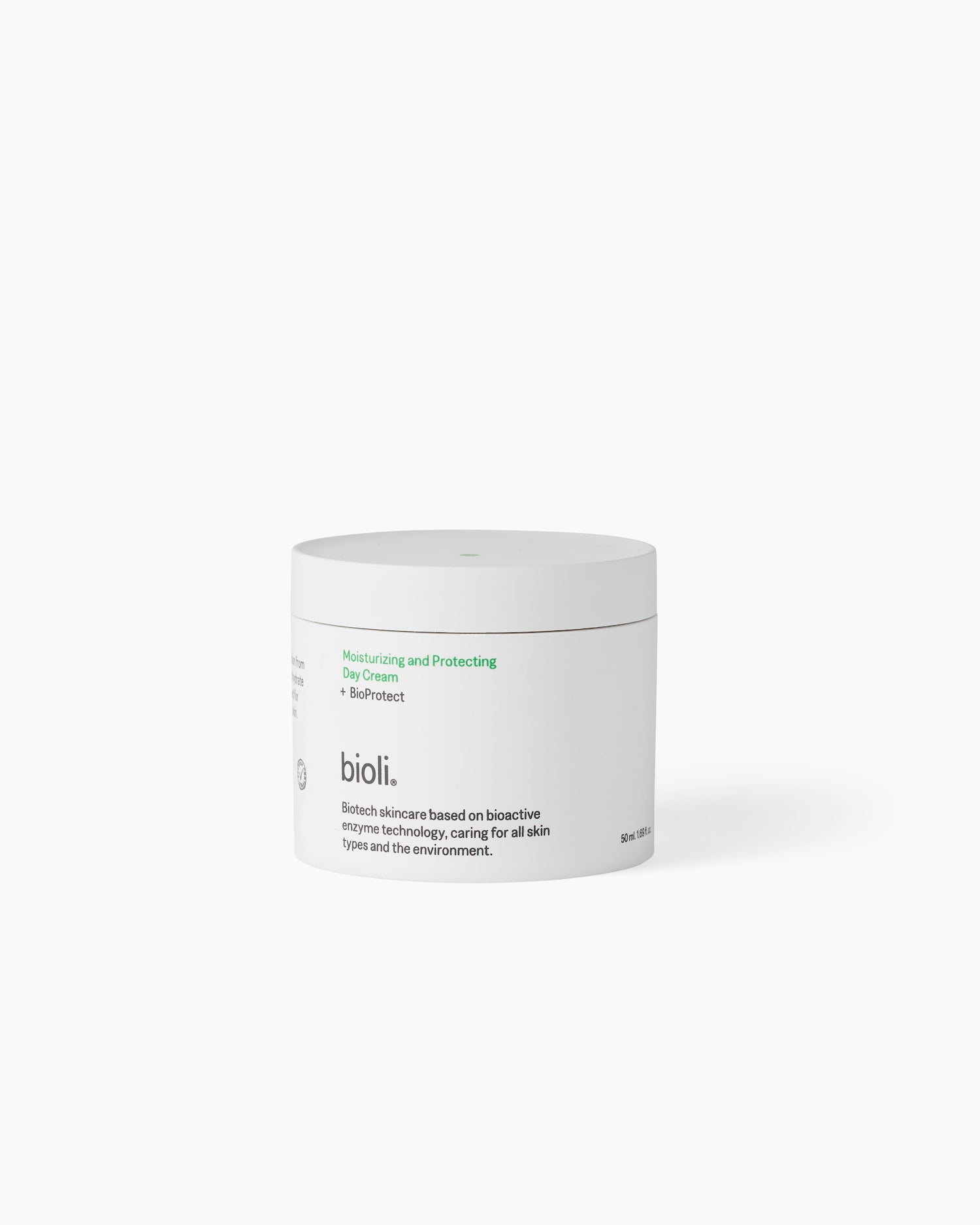
As an example, below is the complete INCI list for Bioli’s Moisturizing and Protecting Day Cream. The formula is fragrance-free and contains no essential oils. The Day Cream is AllergyCertified and dermatologically tested for sensitive skin. INCI: Aqua, Isononyl Isononanoate, Glycerin, Glyceryl Stearate Citrate, Cetearyl Alcohol, Glyceryl Laurate, Butyrospermum Parkii Butter, Superoxide Dismutase, Sodium Acetylated Hyaluronate, Cellulose, Sodium Benzoate, Potassium Sorbate, Pentylene Glycol, Tromethamine, Phenoxyethanol, Caprylyl Glycol, Sodium Hydroxide.
Biotech skincare for redness and rosacea-prone skin
Biotech skincare uses biotechnology to develop targeted ingredients based on skin biology. This allows specific functions and properties to be developed with a high degree of precision and consistency. This can be particularly relevant for sensitive, reactive or redness-prone skin, where effective skincare also needs to be well tolerated. Rather than choosing ingredients simply because they are natural or familiar, biotech skincare focuses on what an ingredient is designed to do and how it interacts with the skin.
At Bioli, we use biotechnology to develop and select bioactive ingredients with targeted functions, combining efficacy, precision and skin compatibility to create skincare that is mild yet effective. Explore the range below.
Bioli hudpleje


Dagcreme + ansigtshåndhåndklæde
- Regular price
- 549,00 kr
- Regular price
-
610,00 kr - Sale price
- 549,00 kr


Trio: Rens + serum + dagcreme
- Regular price
- 1.336,50 kr
- Regular price
-
1.485,00 kr - Sale price
- 1.336,50 kr

Rens + dagcreme
- Regular price
- 774,00 kr
- Regular price
-
860,00 kr - Sale price
- 774,00 kr

Serum + dagcreme
- Regular price
- 999,00 kr
- Regular price
-
1.110,00 kr - Sale price
- 999,00 kr

Common questions about rosacea, redness and skincare
Can a face cream help with facial redness?
A face cream cannot guarantee that redness will disappear, and skincare should not be considered a treatment for rosacea. It can, however, help maintain hydration, support the skin barrier and minimise unnecessary irritation. For some people, this can help the skin feel more comfortable and look more balanced.
What should you look for in a face cream for rosacea-prone skin?
Look for a mild, well-tolerated formulation that supports hydration and the skin barrier. Fragrance-free skincare can be a sensible choice if your skin is sensitive or reactive. It is also worth looking at the complete ingredient list rather than choosing a product based only on the term “rosacea cream”.
What ingredients should you avoid with rosacea-prone skin?
There is no universal list of ingredients that everyone with rosacea needs to avoid. Individual triggers vary. However, if your skin is easily irritated, it can be sensible to be mindful of fragrance, essential oils, harsh cleansing and intensive exfoliation. Introducing too many new products at once can also make it harder to identify what your skin reacts to.
What is the best face cream for redness and rosacea-prone skin?
There is no single best face cream for everyone with redness or rosacea-prone skin. The right choice depends on individual skin needs and tolerance. A mild, fragrance-free formulation with hydrating and barrier-supporting ingredients can be a good starting point for sensitive, redness-prone skin.