
I had two children and a good career at Novozymes when I began experiencing issues with my skin. It may have been hormonal changes – or simply the pressure of everyday life. I had never been particularly interested in skincare or makeup, and considering there are around 3,000 different skin conditions, it became quite a journey to understand what my skin was reacting to. I consulted several dermatologists to learn more, and through my work at Novozymes, I was also gaining insight into enzymes and how biotechnology is shaping the future across industries.
That made me wonder whether this could be the way forward in skincare – creating a product line based on enzyme technology that is both effective and gentle. Not one or the other.
There were two key areas where I believed Bioli could make a difference. The first was ingredients. Regulation in skincare is not particularly strict, which is paradoxical given that the skin is our largest organ. In my view, “natural skincare” is widely misunderstood. Natural ingredients – including organic ones – can cause allergic reactions, as plant extracts contain active compounds that some people react to. They can also vary in composition, meaning consistency from product to product is not guaranteed. I don’t dismiss that they can have positive effects, but the risk of the opposite is also present. Additionally, they compete with food resources, require land, and are resource-intensive to produce – for example oils like sunflower or jojoba. Organic farming can be even more resource-demanding. Meanwhile, commonly used “hero ingredients” such as vitamin A, vitamin C, and AHAs can be quite harsh and are not suitable for sensitive or compromised skin. They are also often derived from petrochemicals, which is rarely addressed.
Bioli's products are a response to both harsh synthetic and natural ingredients. The industry has moved from synthetic skincare to clean beauty and natural formulations. Now, I believe, it is time for biotech skincare.

Interview with Nina Wiberg Rosenquist, CEO of Bioli, featured in ELLE Denmark, April 2025
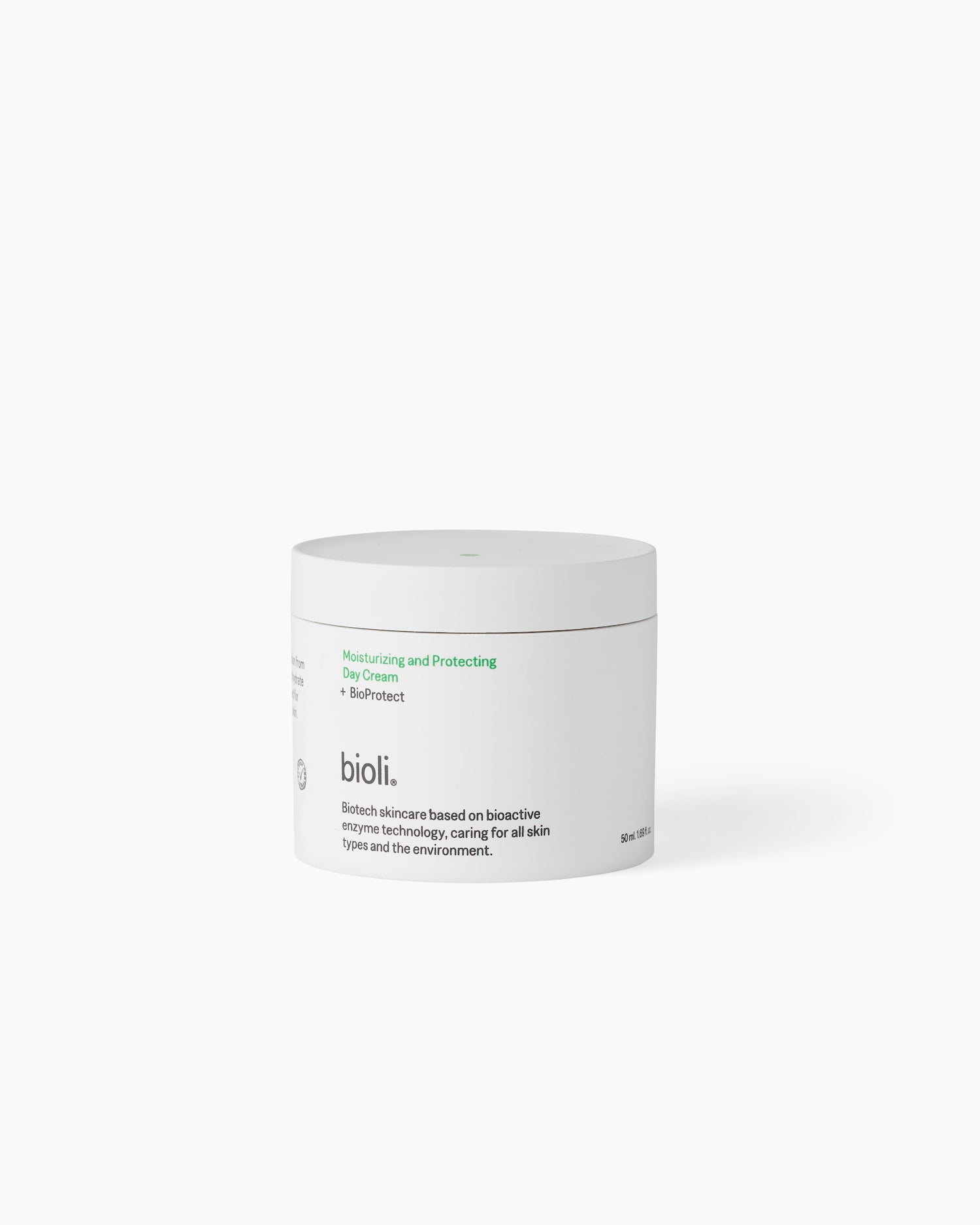
Biotech skincare uses lab-developed ingredients produced through biological processes involving bacteria, fungi, or yeast. This allows for the creation of targeted, effective, and at the same time gentle ingredients – with a more sustainable profile. I have been working on this for three years, and the first product, the Moisturizing and Protecting Day Cream in our biotech-based line of everyday products has just launched. The others will follow soon. We combine enzymes with the best biotech ingredients available – and of course, we do not use fragrance.
Our first product, the day cream, went through nine different iterations before we reached the final version. Every decision was guided by our overall purpose: to create a product that is sustainable, gentle, and effective. In one of the early versions, we used plant oils and Carbomer – one of the most commonly used thickening agents – because it would create a soft texture. However, our research partners at DTU Biosustain (Novo Nordisk Center for Biosustainability) quickly rejected this approach. Plant oils have a high environmental impact and carry allergy risks, as mentioned earlier. Carbomer is synthetic, energy-intensive to produce, non-biodegradable, and may contribute to microplastic pollution. Instead, we insisted on using biotech-based ingredients with similar functional properties. We work with life cycle assessments and have compared enzymes with vitamin C and exfoliating acids like AHA and BHA. The results showed that enzymes reduced water, energy, and CO₂ consumption by up to 80% compared to vitamin C, and up to 90% compared to AHA and BHA.
Very few of our decisions have been based on intuition. Most are grounded in evidence.
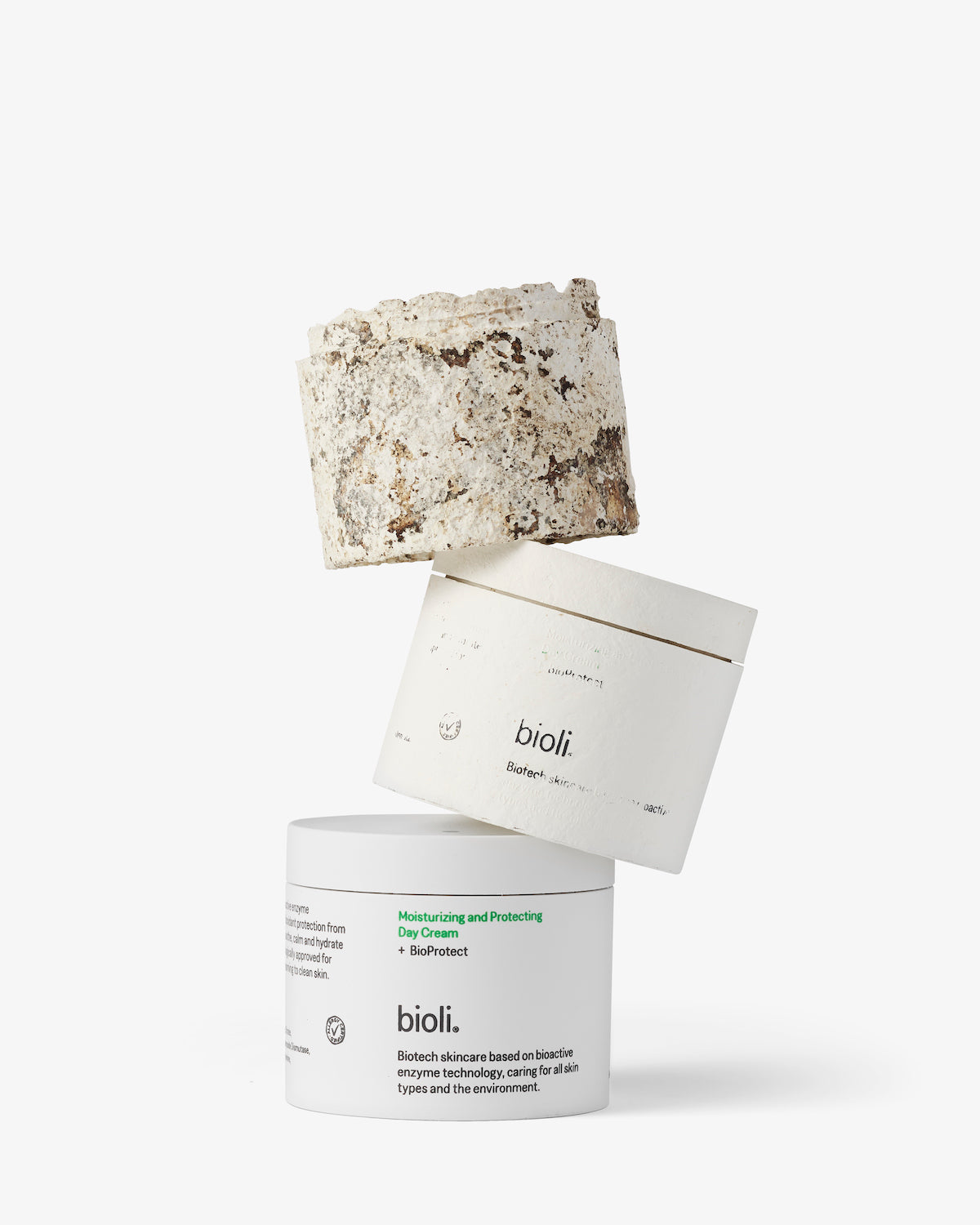
The second area I wanted to challenge is packaging. Our packaging is made from fermented microorganisms and is currently the only one in the world that is 100% biodegradable – naturally breaking down in home compost conditions. This is an overlooked aspect. I don’t understand why there isn’t the same level of focus on sustainable packaging as there is in the food and beverage industry. I do understand why brands choose plastic or glass; it is significantly cheaper. Our packaging is considerably more expensive, and our margins are therefore lower, as research, biotech ingredients, and biodegradable materials all come at a higher cost. But I believe this is an investment that will pay off over time – and that we are ahead of where the industry is going.
In the long term, the goal is to develop skincare for inflammatory skin conditions such as psoriasis, acne, eczema, and rosacea. Alongside the product line, we are running a dedicated research track. Up to 70% of the global population experiences sensitive skin, and around 25% suffer from inflammatory skin conditions. Today, treatment often involves steroid creams, which can be harsh and have significant side effects, or basic moisturizers that only soothe without delivering real results. I have interviewed 70 men and women with skin concerns, and many experience social anxiety to a degree that affects their daily lives. That matters to me.
I want to help people – while also taking responsibility for the environment.
This is not just about building a business. It’s about shifting the direction of the skincare industry – towards starting in the lab with data, rather than with marketing concepts. I didn’t create Bioli to sell more skincare, but to inspire a different approach.
We have only just launched our first product, so we are still learning who our core audience is. I would like to be present in pharmacies, where consumers can receive guidance from trained professionals, or in skincare stores with knowledgeable staff. The question is whether they are ready for this new category: biotech skincare. It should be everywhere – but it isn’t yet.
We need partners who understand the value, the innovation, and the long-term perspective – and who are willing to help educate consumers. It is a heavy lift, but a necessary one.