
The scale of the skincare packaging waste problem
The beauty and personal care industry produces an estimated 120 billion units of packaging every year. The majority of this packaging is never recycled. Much of it ends up in landfill, meaning your daily skincare routine could still be sitting there 100 years from now.
Two of the most common formats illustrate the issue clearly:
-
Glass jars: Often perceived as sustainable, but heavy to transport—resulting in high CO₂ emissions across global supply chains.
-
Plastic jars and tubes: Lightweight and technically recyclable, yet around half of consumers do not recycle them, making them effectively single-use.
Plastic’s problem begins at production
Plastic is not only a disposal issue—it is also harmful from the moment it is made. A study, Mapping the chemical complexity of plastics, published in the journal Nature, found that over 16,000 chemicals are used in plastic manufacturing to improve flexibility, clarity, and durability. More than 4,000 are known to be toxic to human health—through ingestion, skin contact, or inhalation—while the rest remain largely untested. Numbers are based on current research; many chemicals remain unstudied.
This applies to conventional plastics—including virgin, recycled (PCR), recovered ocean plastic, and bio-based plastics that are chemically identical to fossil plastics, such as sugarcane-based polyethylene.
Plastic packaging is therefore both an environmental and public health concern, highlighting the need to consider its full lifecycle—from production to disposal. While glass and plastic still dominate the market, neither provides a complete solution, spurring innovation in newer packaging alternatives.
Regulation is coming – but the journey is long
Fortunately, regulation in this space is tightening, as we explored in “Skincare packaging and regulation: A blind spot in the EU’s new packaging legislation”, but there is still a long way to go before these rules fully reshape the market.
New and emerging skincare packaging options
Below is an overview of both conventional and next-generation skincare packaging types, including their benefits and limitations.
Overview of skincare packaging options
| Packaging type | Material | Advantages | Key limitations | End-of-life reality |
|---|---|---|---|---|
| Virgin plastic | Fossil-based polymers | Cheap, lightweight, durable | High fossil footprint, toxic additives | Mostly landfill or incineration |
| PCR plastic | Recycled plastic waste | Reduces virgin plastic use | Same chemical load and recycling limits | Often downcycled or landfilled |
| Bioplastics (e.g., sugarcane-based PE) | Plant-based polymers | Renewable feedstock | Chemically identical to fossil plastic | Requires recycling infrastructure |
| Glass | Silica-based mineral | Reusable, inert | Heavy transport emissions | Recyclable, but energy-intensive |
| Industrial-compostable | Bio-based materials | Certified compostability | Needs industrial composting | Fails without infrastructure |
| Home-compostable | Bio-based, often fermentation-derived | Breaks down naturally at home | Higher cost, limited availability | Fully biodegrades |
Table 1: Source: Bioli, 2026
PCR plastics and bioplastics
Post-consumer recycled (PCR) plastics and bioplastics made from materials such as sugarcane or recovered ocean plastic represent important steps away from virgin fossil plastic. They reduce demand for new raw materials and help valorise waste streams.
However, they share a critical limitation: their end-of-life is still plastic.
Recovered ocean plastic is conventional plastic that has circulated in the environment and often contains additional contaminants. Sugarcane-based plastics, while renewable in origin, are frequently chemically identical to fossil plastics and require the same additives.
If these materials are not correctly collected and recycled—which often they are not—they end up in landfill or the environment just like conventional plastic. While they are improvements, they do not fundamentally solve the system problem.
Biodegradable packaging
There are two types of biodegradable packaging:
1. Industrial compostable biodegradable packaging
Industrial-compostable packaging is designed to break down in industrial composting facilities under tightly controlled conditions such as elevated temperatures, humidity, and oxygen levels.
The most widely used certification is:
-
OK compost INDUSTRIAL (EN 13432): All components, including inks and additives, must fully biodegrade in an industrial composting plant.
When the correct infrastructure is in place, industrial composting can be an effective solution. However, access to these facilities varies widely across regions. As a result, many industrially compostable materials are mis-sorted and end up incinerated or landfilled, losing much of their intended environmental benefit.
2. Home compostable biodegradable packaging
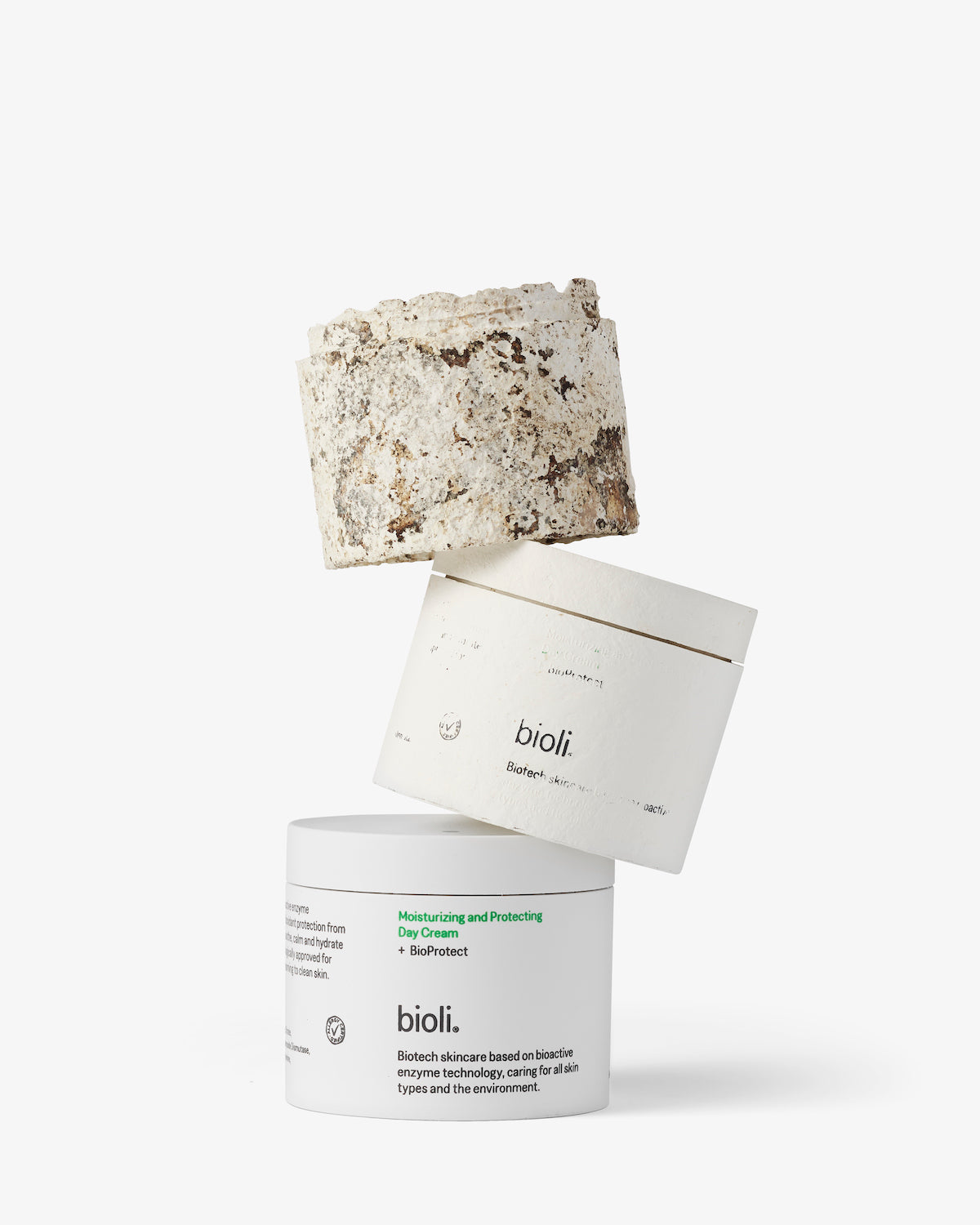
Home-compostable packaging represents the most advanced biodegradable solution currently available. These materials are often made from fermented microorganisms and are designed to break down in a home compost heap, where temperatures are lower and less consistent than in industrial systems.
Products certified under:
-
OK compost HOME (EN 13432) biodegrade completely in garden compost conditions, without requiring specialised infrastructure.
Home-compostable materials look and feel like plastic—but behave very differently. They can be placed directly into a backyard compost, where they biodegrade naturally in weeks or months, not centuries.
Even if they end up in general waste, they release only natural-cycle carbon and break down far faster than fossil-based plastics, making them a more resilient and realistic solution within today’s imperfect waste systems.
If these solutions exist, why aren’t they everywhere?
The answer lies in cost and complexity for skincare brands. Home-compostable and next-generation materials can be up to ten times more expensive than plastic or glass. In addition, brands cannot simply swap packaging: formulations often require new stability testing, safety assessments, and regulatory approvals. This is why change remains slow.
What to look for to make a difference
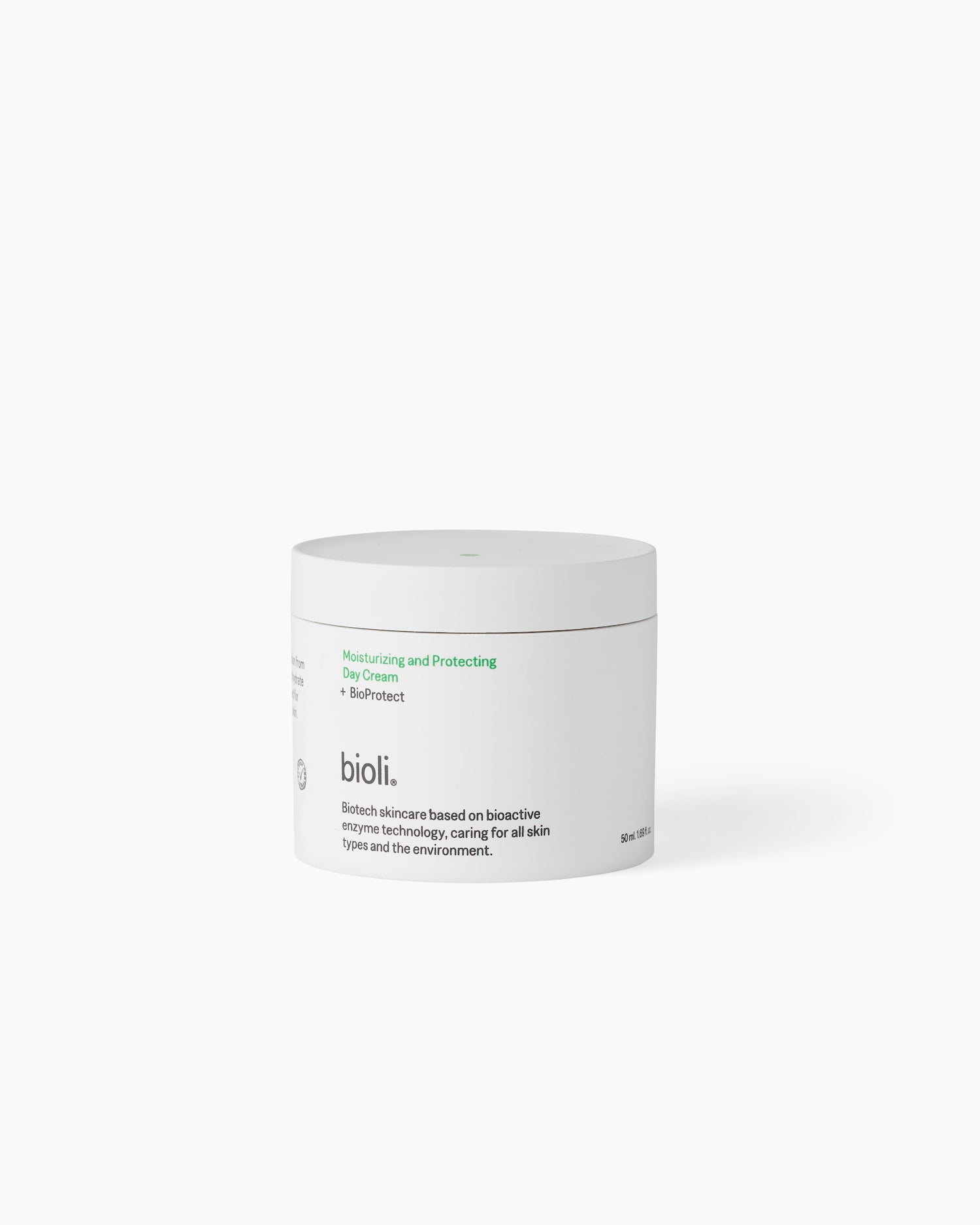
If you want to help drive change in the industry, a good place to start is by looking at newer brands that are designed with sustainability in mind from the outset. Explore Bioli's product range – all in biodegradable packaging. More environmentally conscious alternatives already exist. Now it’s just a matter of seeing more brands adopt them in their product ranges – and for us as consumers to support the brands that have already chosen that path.